
Who vinyl suits best
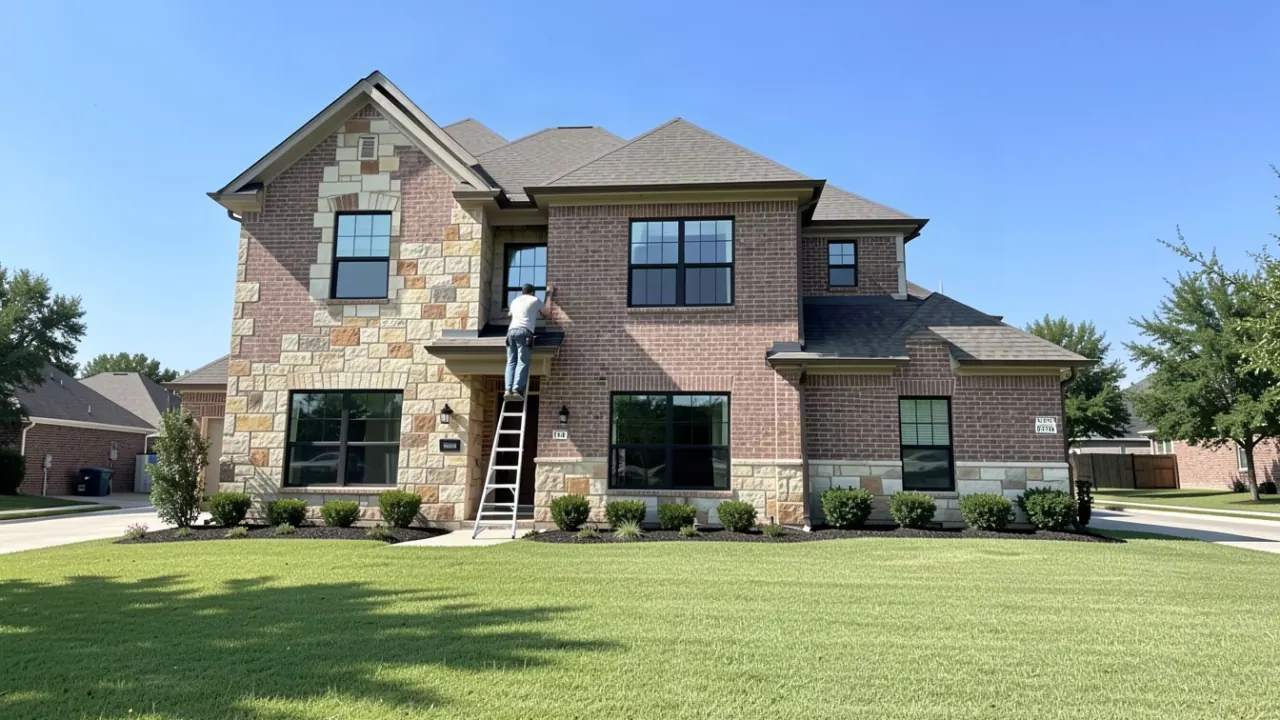
Vinyl makes the most sense when budget matters and the house doesn't call for a wood look. Think 2000s and 2010s builder homes, rental properties, and anyone replacing a lot of windows at once. The frames are low maintenance and insulate well, and ENERGY STAR notes that vinyl sections may be hollow or filled with foam, with wide sills sometimes reinforced with metal or wood. The Department of Energy points out that insulated vinyl cavities beat standard vinyl and wood on thermal performance.
It's less ideal if you want dark colors, very large openings or slim sightlines. Those jobs often point toward fiberglass and wood windows.
Signs your current vinyl windows are done
- Glass that fogs or shows a white haze between the panes
- Sashes that won't stay up or tilt in anymore
- Frames that have yellowed, cracked or pulled away from the wall
- Locks that don't line up, so the sash never seals tight
Picking a style
- Double-hung. Both sashes slide and tilt in for cleaning. The default in many two-story homes.
- Slider. Sashes move side to side. The lowest-cost operating style on most price lists.
- Casement. Hinged on one side and opened with a crank. Good over a sink or counter where pushing a sash up is awkward.
- Picture. Fixed glass that doesn't open. The cheapest way to fill a large opening with light.
How vinyl compares to other frames
Vinyl wins on price and upkeep. Fiberglass and clad wood win on stiffness and lifespan: the same national calculator that gives vinyl 20 to 30 years lists clad wood and fiberglass at about 30 to 50 years or more. On a ten-window job, vinyl double-hung inserts run a few hundred dollars less per window than fiberglass double-hung on that calculator's numbers. For many owners that gap pays for a better glass package instead.
Price ranges by style
| Vinyl style | Installed per window | Source |
|---|---|---|
| Slider | $569 to $1,002 | ProjectCostPro |
| Picture (fixed) | $622 to $1,052 | ProjectCostPro |
| Double-hung | $651 to $1,102 | ProjectCostPro |
| Casement | $740 to $1,252 | ProjectCostPro |
| Vinyl, any style | $800 to $1,600 | Pella 2026 guide |
The calculator rows assume a ten-window insert job with old units hauled away and no new trim or permit. Casements cost more because of the crank hardware. Your price depends on sizes, glass and install method, and only a measured quote will tell you. The cost page has more detail.
What a vinyl window project involves
- Measure. The installer measures each opening at several points, because vinyl inserts are custom sized and older openings are rarely square.
- Order. Windows are built to those sizes. Ask your pro how long the factory takes.
- Remove. On install day the crew takes out the old sash, and for full-frame jobs the frame too.
- Set and seal. The new unit goes in level, then gets insulated and sealed inside and out.
- Clean up and check. Every sash should open, close and lock smoothly before the crew leaves.
Most of the price is set in step one. Odd sizes, arched tops and second-story openings all add cost, so the measure visit matters more than the brochure. The full step-by-step is on window installation.
Questions to ask the pro
- Are the frame chambers foam-filled, or hollow?
- What are the whole-window U-factor and SHGC on the NFRC label?
- Is this an insert or a full-frame install, and why?
- Who handles the city permit, if one is needed?
- What does the warranty cover, and who backs it, the maker or the installer?
- Will the new frames shrink the glass area noticeably?
If cutting the electric bill is your main goal, also read energy-efficient windows before you choose a glass package. ENERGY STAR's criteria page explains what the certification requires.
Areas we cover for vinyl replacement windows
Window replacement questions
- Do vinyl windows ever need painting?
No. The color goes all the way through the frame, so there's nothing to scrape or repaint. A wipe-down with mild soap is about all the upkeep they need.
- How long do vinyl replacement windows last?
One national cost calculator puts the usual life at 20 to 30 years. Quality, sun exposure and installation all move that number.
- Why is a vinyl casement priced higher than a double-hung?
Casements use a crank, hinges and a multi-point lock, so there's more hardware in every unit. Calculator data shows them running roughly $90 to $150 more per window than a double-hung.
- Can vinyl windows earn the ENERGY STAR label?
Yes. ENERGY STAR lists vinyl among the frame materials used in certified windows. The label depends on the whole window's ratings for your climate zone, not on the frame alone.
- Is foam-filled vinyl worth the upgrade?
It usually improves the frame's insulation. Ask the pro to show you the NFRC numbers for both versions so you can see the difference instead of guessing.